

44 – The Hawthorn and the Lark
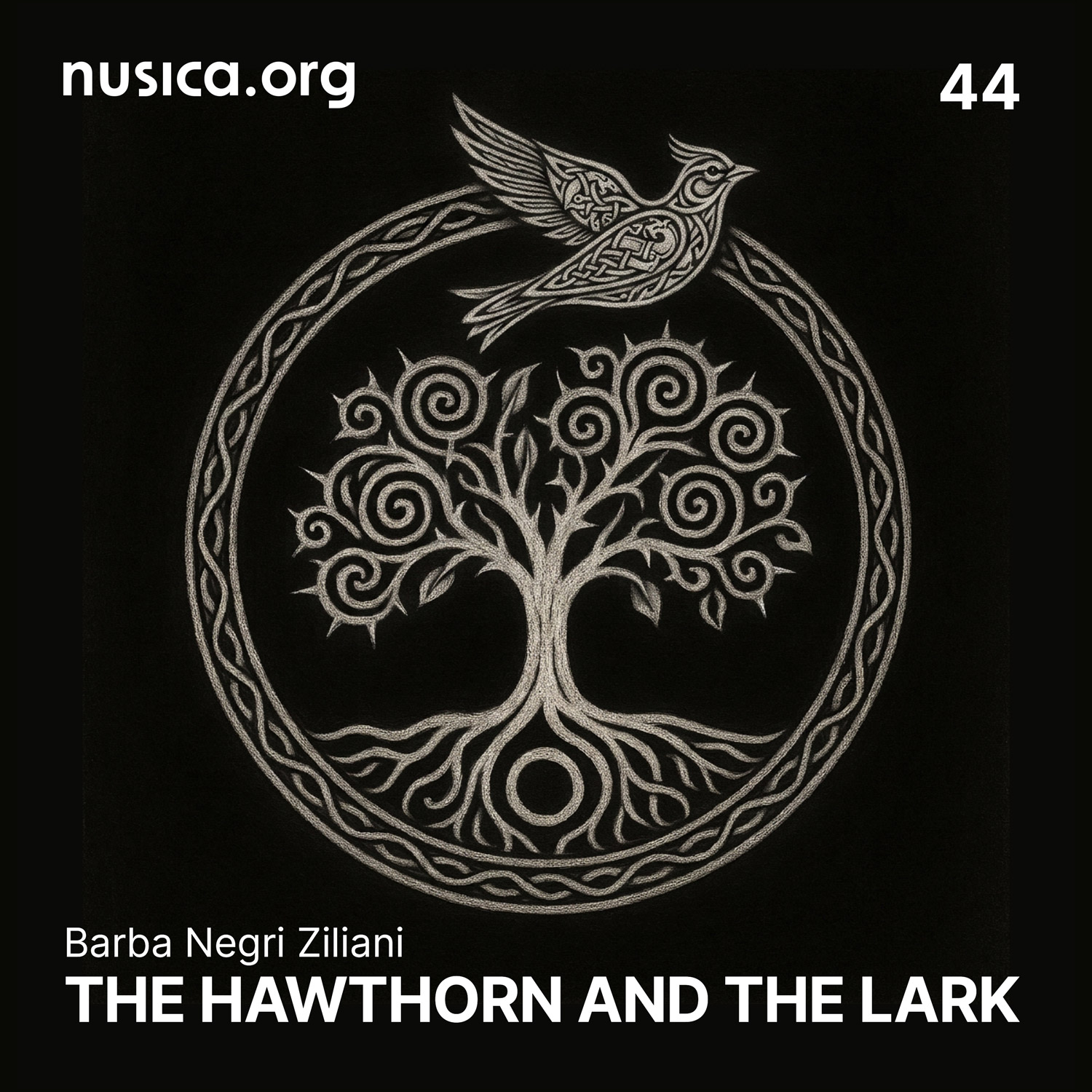
44 The Hawthorn and the Lark
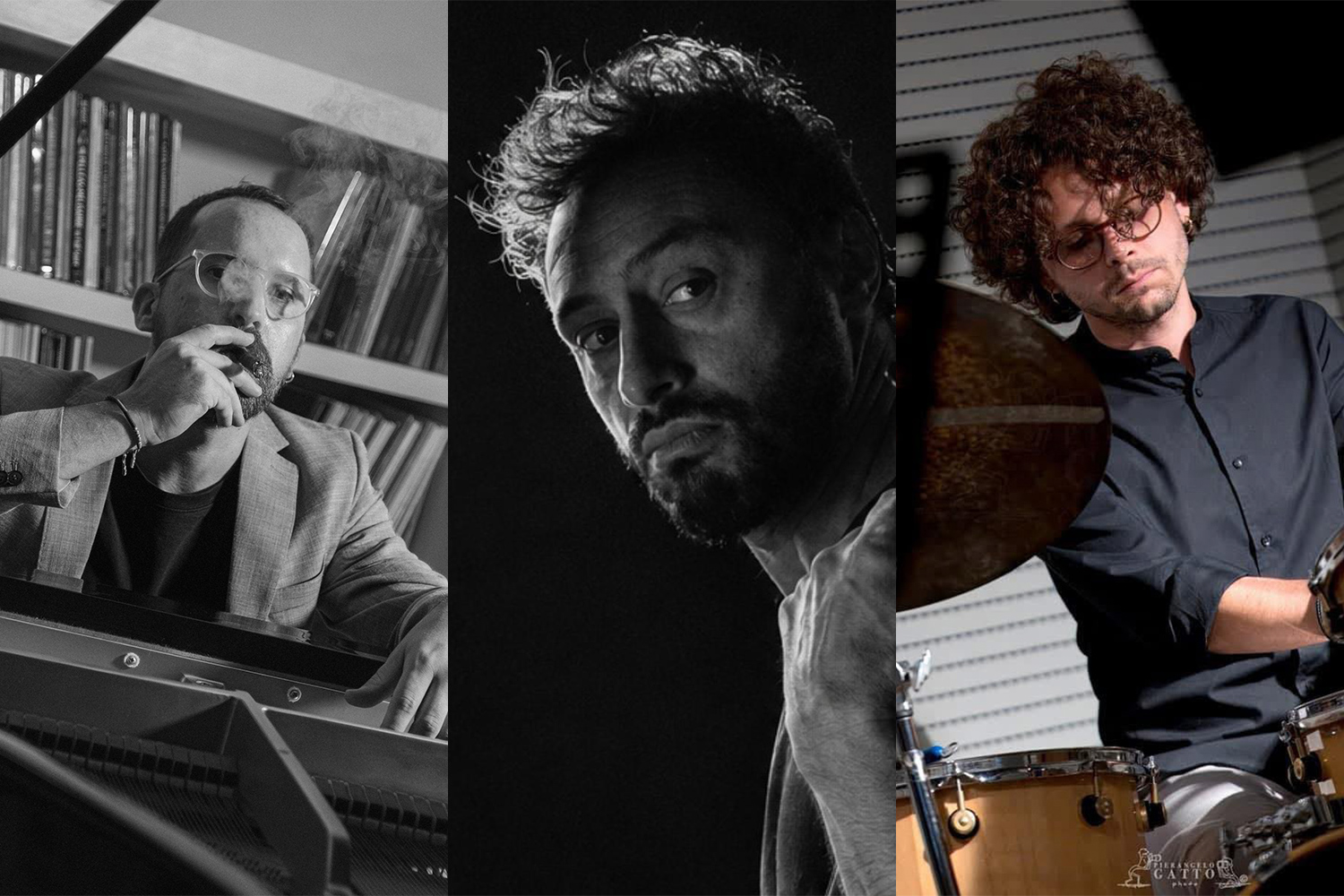
The third album by the trio of Riccardo Barba, Nicola Ziliani and Federico Negri is released on nusica.org. Classically rooted composition, jazz improvisation and the driving energy of rock come together in a musical journey exploring the relationship between humanity and nature, featuring Simona Severini.
The album will be available on all digital platforms from 18 November 2026.
The single Fairy Circles will be released on 13 November 2026.
Barba Negri Ziliani
Riccardo Barba – piano, organ, synthesisers
Nicola Ziliani – double bass
Federico Negri – drums, percussion
Guest: Simona Severini – vocals
The Hawthorn and the Lark: a journey through music and nature
Released on Wednesday 18 November 2026 on nusica.org, The Hawthorn and the Lark is the third studio album by the Barba Negri Ziliani trio. It brings together Riccardo Barba on piano, organ and synthesisers, Nicola Ziliani on double bass and Federico Negri on drums and percussion, with vocalist Simona Severini featured on three tracks. The album is preceded by the single Fairy Circles, out on Friday 13 November 2026.
The trio was formed in 2019, but the musicians have been collaborating since 2010 on projects ranging from swing and jazz to classical and contemporary music. After an initial period devoted to standards and works by other composers, the group developed its own identity with Too Many Keys (2020) and Orpheus in the Underground (2022). Written during the pandemic, the latter imagines Orpheus descending into the underworld through the Underground of a deserted London.
With The Hawthorn and the Lark, the group achieves a synthesis that comes closest to its original musical vision. Three musical languages converge on the album. Barba and Ziliani’s classical training gives rise to open forms that move away from the recurring structures of jazz standards. Improvisation emerges from the compositions and the dialogue between the instruments. British rock of the 1990s and progressive rock of the 1960s and 1970s provide the driving energy running through the tracks. Continuous counterpoint between piano, double bass and drums allows listeners to follow different musical lines within the same piece. Most of the repertoire was written by Barba, who composed the new pieces over four months before the trio began rehearsing.
The expanded instrumentation continues an exploration begun on previous albums: a string quartet on the first, and a small ensemble of strings and wind instruments, synthesisers and electric organ on the second. This album also reflects Barba’s work as an orchestrator: piano, double bass and drums engage in dialogue with the voice, pipe organ and sounds recorded on the Presena Glacier.
At the heart of the album lies the relationship between humanity and nature. The symbols in the title evoke Celtic culture. The hawthorn represents a dark passage into the fairy realm, while the lark conveys an image of hope and openness towards the sky. Subtle musical references to Celtic tradition help create suspended atmospheres with an ancient resonance.
“I wrote these pieces thinking about the relationship between humanity and nature, at a time when climate is a central issue,” explains Riccardo Barba. “I didn’t want to provide answers, or even suggest the questions. I would like this album, like David Lynch’s films, to have no single explanation, and to encourage each listener to reflect on their own relationship with nature rather than that of Humanity with a capital H. If it gave rise to many different interpretations, that would already be a success for me.”
The album follows an emotional arc of descent and gradual ascent. Ecophilia (Nature Dance) opens with an almost pagan dance, offering an initial key to its interpretation. In Sailing Stones, the movement of the stones evokes invisible, subterranean forces. Their blind journey towards the surface becomes a metaphor for resilience and quiet hope.
Unfolded reaches the darkest point. Against the rhythm of a funeral march, sounds of the Presena Glacier emerge. Recorded by the musicians themselves and incorporated into the studio-recorded music, they build towards the final explosion.
“We went up to the glacier and spent an entire day recording the movements of the melting and breaking ice and the water flowing out of it,” recalls Barba. “When amplified, those sounds turn tiny cracks into thunderous roars that are almost unbearable. It is an ailing glacier, slowly dying, and above all we wanted to experience that ourselves.”
Next comes Late Night Travel, composed by Barba in 2015 during a night-time drive through the English countryside. The memory of a moment of harmony with the landscape becomes a gentle, melodic piece, a pause that allows the listener to catch their breath.
Simona Severini’s voice expands the trio’s expressive possibilities. Her involvement originated during rehearsals of the Tom Waits song that closes the album, when Ziliani suggested bringing her into the project. That idea developed into a collaboration spanning two further tracks, with the voice used differently in each.
In Fairy Circles, Severini sings without words. Her layered, overdubbed vocalisations intertwine with the instruments, giving voice to the supernatural presences evoked by the title and creating an ethereal atmosphere.
In The Unbroken Stream, which runs for nearly ten minutes, Severini instead recites a stream of consciousness written by Barba. The voice is deliberately kept low in the mix, a choice inspired by Lucio Battisti’s Anima Latina, allowing the words to reveal themselves over repeated listens. The trio is joined by synthesisers and a pipe organ recorded at the Church of Santa Maria della Pace in Brescia. Hans Zimmer’s soundtrack for Interstellar inspired Barba to use this instrument, chosen for its commanding sound and its ability to bridge different musical eras. Themes and timbres overlap in an increasingly dense texture.
Green Grooves brings rhythm back to the foreground. The image of a forest inspired Barba to write a piece drawing on Afro-Cuban tradition. The album is also punctuated by the four Elements: three solo improvisations for piano, double bass and drums respectively, and a chorale. The four parts draw inspiration from earth, fire, air and water, the elements of the Western philosophical tradition.
The album closes with Tom Waits’s You Can Never Hold Back Spring, a song that has stayed with Barba since he saw Roberto Benigni’s film The Tiger and the Snow. Initially conceived as an instrumental, the song takes on a different colour with Severini’s voice, whose lower register offers an interpretation distinct from Waits’s gravelly delivery. It is the only song on the album with sung lyrics and serves as a postscript. After the album’s more unsettling passages, the return of spring becomes both a sign of hope and a reminder of nature’s ability to endure beyond humanity.
Barba Negri Ziliani – The Hawthorn and the Lark
Tracklist
Ecophilia (Nature Dance) – 07:53 – Riccardo Barba
Elements (Part I: The Piano) – 03:21 – Riccardo Barba
Sailing Stones – 04:55 – Riccardo Barba
Unfolded – 05:23 – Riccardo Barba
Late Night Travel – 03:05 – Riccardo Barba
Elements (Part II: The Bass) – 02:40 – Nicola Ziliani
Fairy Circles – 05:57 – Riccardo Barba
The Unbroken Stream – 09:38 – Riccardo Barba
Elements (Part III: The Drums) – 01:40 – Federico Negri
Green Grooves – 04:38 – Riccardo Barba
Elements (Part IV: Corale) – 03:36 – Riccardo Barba
You Can Never Hold Back Spring – 04:46 – Tom Waits, Kathleen Brennan
Recorded in Mantua at Digitube Studio by Carlo Cantini and in Bedizzole at RB Studio by Nicola Ziliani. Pipe organ recorded at the Church of Santa Maria della Pace in Brescia. Sounds of the Presena Glacier recorded by the trio. Mixed and mastered by Nicola Ziliani.
Production
Released by nusica.org, 2026
For further information
info@nusica.org
www.nusica.org
Press and communications
Giuseppe Bettiol
comunicati@giuseppebettiol.it
+39 349 1734262
Artist profiles
Riccardo Barba – piano, organ, synthesisers
A classically trained pianist and composer with formal studies in composition, Barba has been involved in rock music since his teens as a keyboardist and songwriter. He works as an orchestrator and composer for various ensembles and writes most of the trio’s repertoire.
Nicola Ziliani – double bass
A classically trained double bassist, Ziliani has also pursued theatrical improvisation, swing and singer-songwriter music from an early age. He met Riccardo Barba in a swing band. He is currently principal double bass of the OFI (Orchestra Filarmonica Italiana). For The Hawthorn and the Lark, as with the trio’s other releases, he handled part of the recording process, mixing and mastering.
Federico Negri – drums, percussion
Having come to jazz from rock, Negri has developed a distinctive, chamber music-inspired touch. He is a much sought-after session musician on the jazz scene and has released an album as a composer and bandleader. Alongside his performing career, he teaches in Mantua.
Simona Severini – vocals
A Milanese, classically trained singer and guitarist, Severini moves between jazz and singer-songwriter music. Her debut album, La Belle Vie, is dedicated to Gabriel Fauré. She established a long-standing collaboration with pianist Enrico Pieranunzi, documented on My Songbook (2016) and Monsieur Claude. A Travel with Claude Debussy (2018). Under her own name, she released the EP Ipotesi (2020) and the single Non faccio niente (Virgin Records, 2022). In 2024 she released Fedra with Daniele Richiedei and Giulio Corini. She has collaborated with Pacifico, Giorgio Gaslini and Gabriele Mirabassi and performed at Umbria Jazz, Paris Jazz Vocal and Milan’s Piccolo Teatro, among others.
The Hawthorn and the Lark
Sostieni nusica.org
nusica.org è un’associazione no profit che promuove la cultura musicale.
Partecipa al progetto con una donazione di 14 euro e riceverai il cd in regalo.