

38 – Somewhere Story

38 Somewhere Story
Oscar Del Barba OX Quartet
From Stage to Sound: A New Musical Perspective on Leonard Bernstein’s West Side Story
The thirty-eighth release from nusica.org — a label that for over a decade has explored the languages of jazz and contemporary improvisation — Somewhere Story finds the Oscar Del Barba OX Quartet offering a fresh take on Bernstein’s legacy: a sonic journey between acoustic and electronic worlds, where music born for the stage becomes living material for exploration.
The album will be available on all digital platforms from November 18, 2025, preceded by the single “America”, out on November 14.
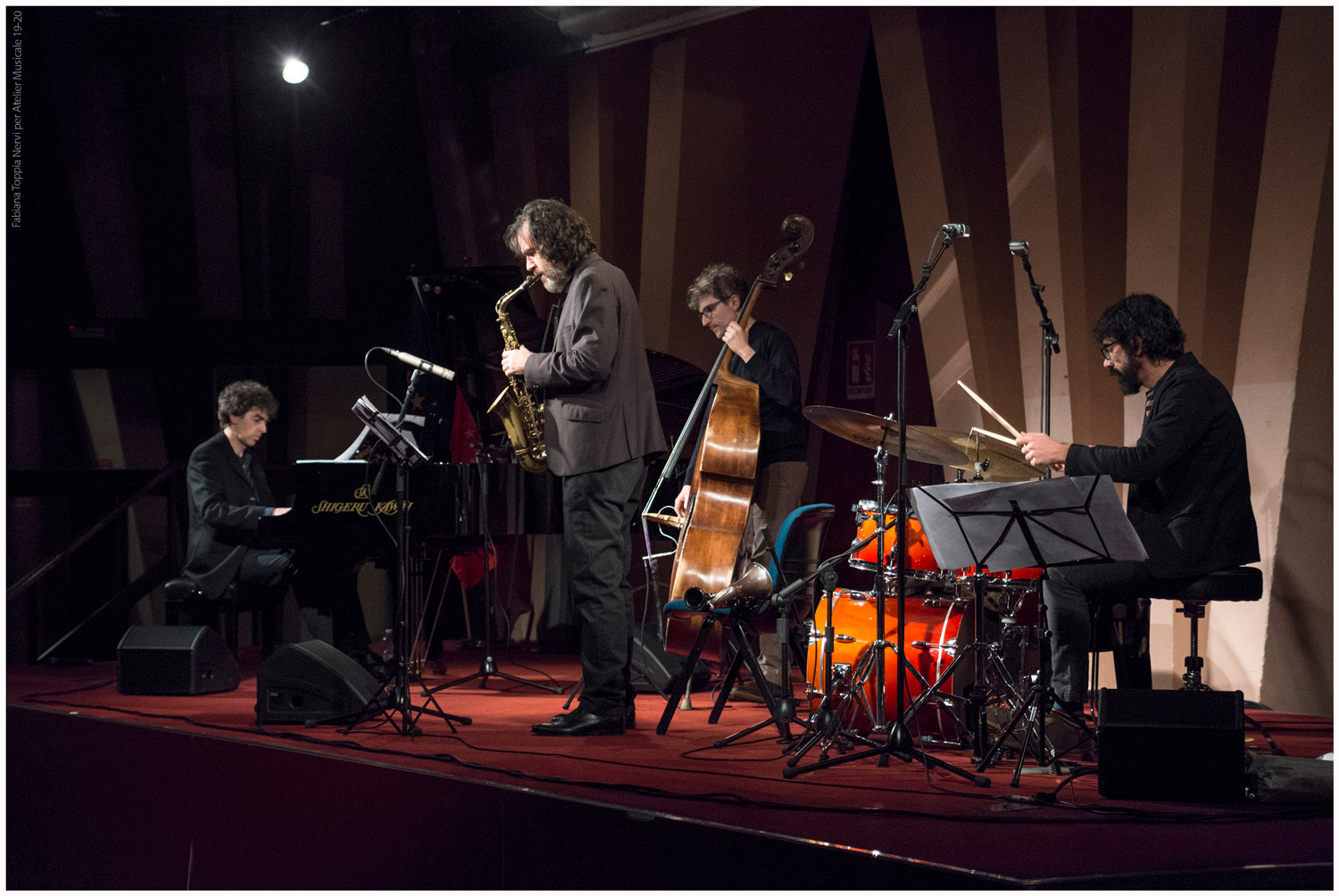
The new project by the Oscar Del Barba OX Quartet came about almost by chance — as often happens with the happiest ideas. The occasion was the Festa dell’Opera organized by the Teatro Grande in Brescia in 2018, celebrating the anniversary of Leonard Bernstein’s birth. Invited to pay tribute to the great composer, the quartet chose to take on West Side Story — one of the most iconic works of the twentieth century — reinterpreting selected excerpts and enriching the sound palette with electronic textures that converse with the group’s acoustic colors.
The concert was met with great enthusiasm, prompting the musicians to record the repertoire in the studio in a single day, capturing the spontaneity and energy of that live experience. After remaining unreleased for several years, the project now sees the light thanks to nusica.org, which is releasing it as an official album. Somewhere Story preserves the original freshness of that performance, transforming a tribute to Bernstein into a personal and passionate reimagining — suspended between memory and invention.
The quartet — Oscar Del Barba (piano, synth, electronics, arrangements), Achille Succi (clarinet, bass clarinet, alto saxophone), Giacomo Papetti (electric bass, electronics), and Andrea Ruggeri (drums) — creates a dynamic and creative dialogue, where each instrument contributes to a wide and multifaceted sonic landscape. With Succi in particular, Del Barba renews a collaboration already explored in a previous project dedicated to Giuseppe Verdi.
At the conceptual heart of the project lies recontextualization: the Oscar Del Barba OX Quartet approaches Bernstein’s themes as living material, freeing them from text and stage to make them thrive in a new musical space, independent of theatrical narration. Bernstein’s writing — so rich in rhythm, color, and theatricality — lends itself naturally to this collective vision, where melody becomes a matter of improvisation and continuous transformation. The electronics, introduced with taste and awareness, expand the sonic range without ever compromising the acoustic essence of the ensemble, which builds an autonomous dramaturgy faithful to Bernstein’s spirit — where freedom and form meet and reflect each other.
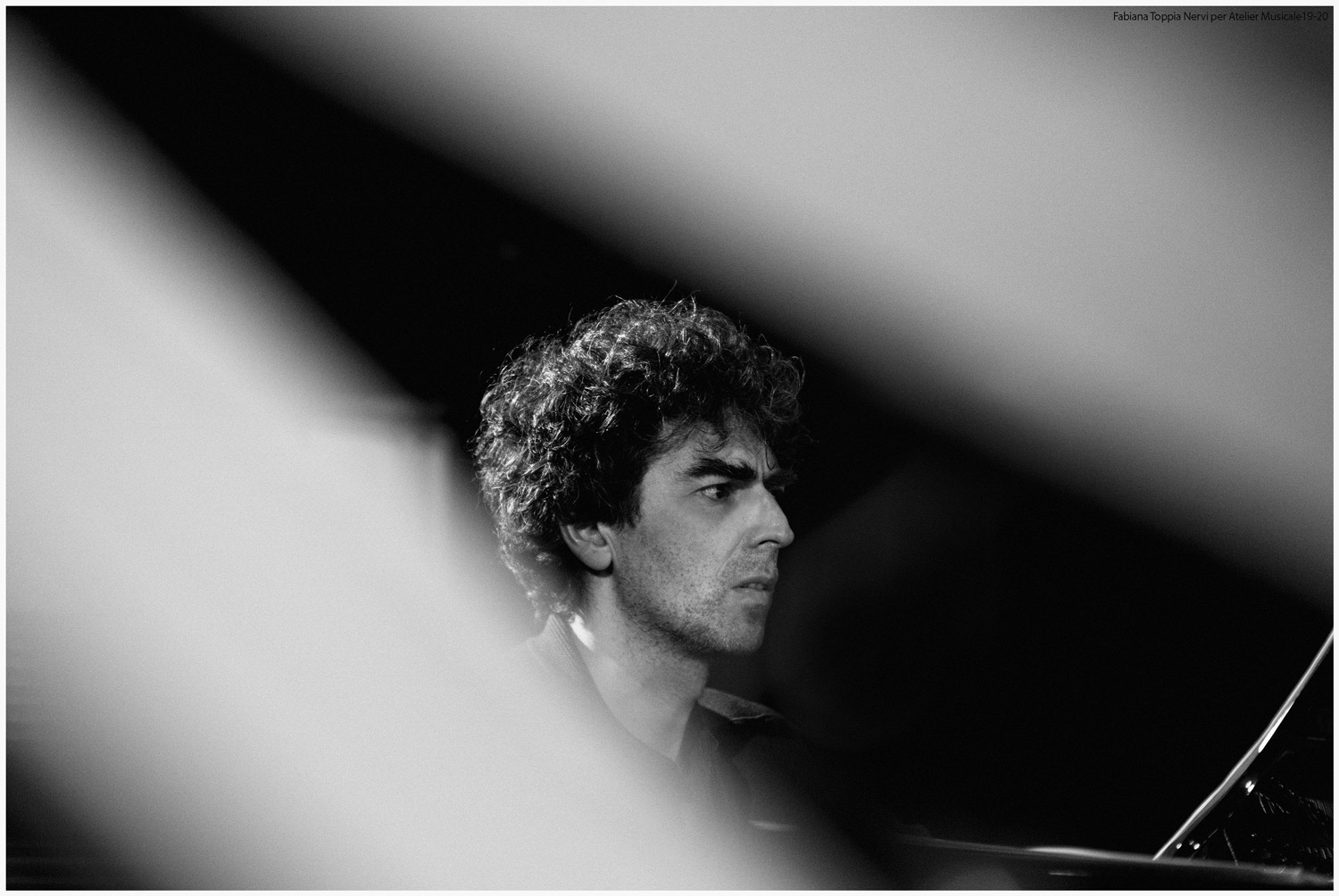
“We wanted to take West Side Story off the stage and bring it back to its musical essence, treating the pieces like jazz standards open to improvisation and color. From the very first rehearsals we worked on small harmonic and rhythmic adaptations, leaving each musician space to intervene freely and shape the sound together. Bernstein always engaged in dialogue with jazz and Latin music, and we continued that dialogue, seeking a balance between respect for the original and interpretative freedom. Electronics allowed us to further expand our palette of timbres, without ever losing the acoustic breath of the group. It’s a living project that changes every time we play it: each piece is a small world to explore, where Bernstein’s memory intertwines with our own voice and the joy of playing together.”
— Oscar Del Barba
The Music
The album’s seven tracks revisit some of the most powerful moments of West Side Story, each reinterpreted with freedom and imagination.
America opens the album with driving energy, where rhythmic strength merges with an almost rock-like vitality. Cool alternates suspended atmospheres with sharply jazz-oriented improvisations, while I Feel Pretty evokes the lightness and dancing rhythm of South American music. In Maria, the lyricism of the original theme expands into a dialogue between acoustic and electronic timbres, creating a rich, contrasting soundscape. One Hand, One Heart moves into more intimate and dreamlike territory, with a rarefied, meditative tone. Somewhere recalls the jazz-rock sounds of the 1980s, blending melody and improvisation in a constantly shifting balance, while Tonight closes the journey with a crescendo of tension and intensity that restores all the dramatic power and emotion of Bernstein’s score.
The result is a musical voyage through styles and sensibilities — from jazz to Latin music, from rock to contemporary lyricism — revealing the deepest nature of West Side Story: a tale of contrasts, tensions, and harmonies, of emotions that find their universal language in music. Somewhere Story is not just a tribute, but a declaration of love for expressive freedom — the story of an encounter between eras, genres, and sounds that continues to speak to the present with the vitality of jazz and the poetry of Bernstein.
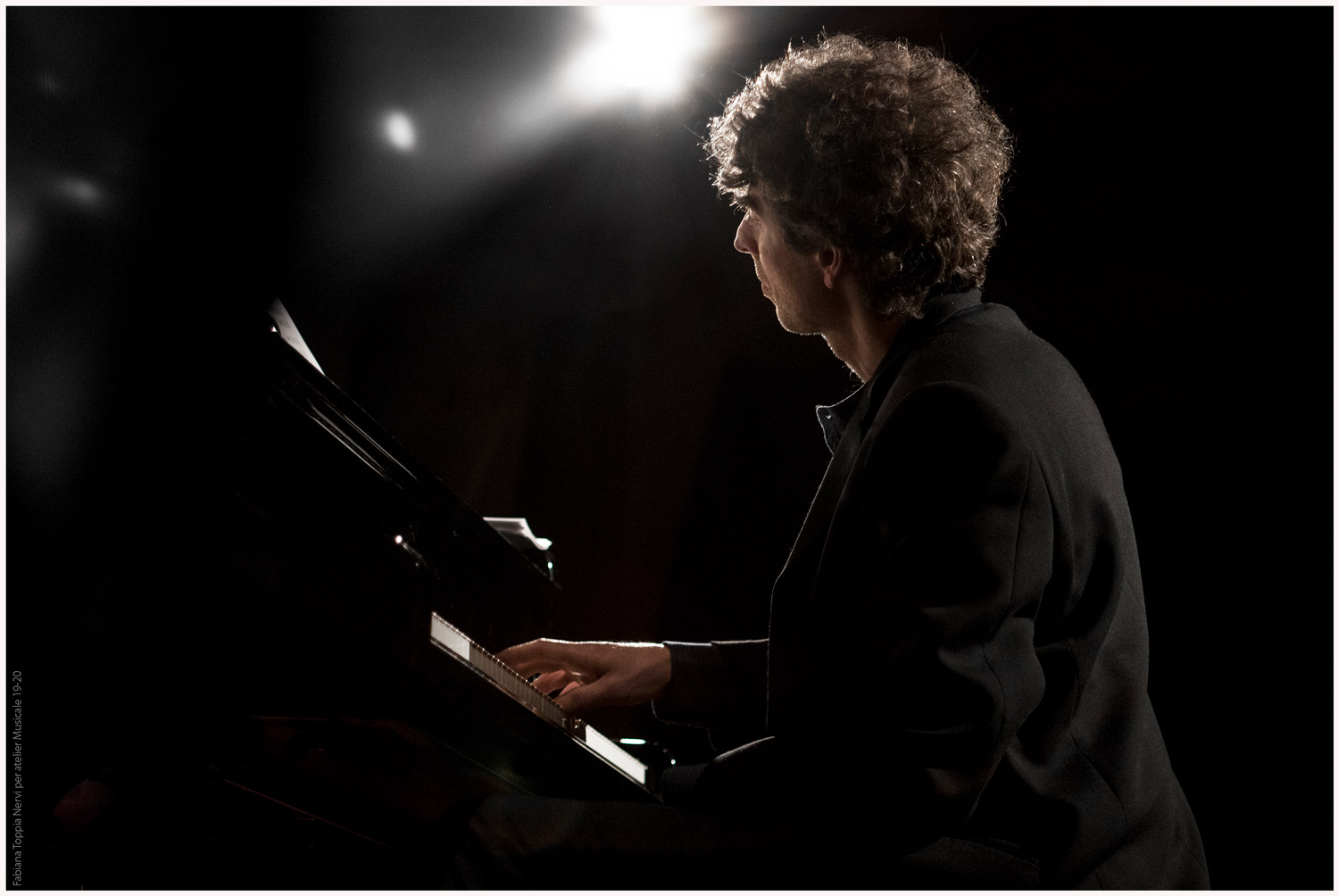
Oscar Del Barba OX Quartet
Oscar Del Barba – piano, synth, electronics, arrangements
Achille Succi – clarinet, bass clarinet, alto saxophone
Giacomo Papetti – electric bass, electronics
Andrea Ruggeri – drums
Somewhere Story
Tracklist
America
Cool
I Feel Pretty
Maria
One Hand, One Heart
Somewhere
Tonight
Music by Leonard Bernstein
Arrangements by Oscar Del Barba
Production
Recorded, mixed, and mastered in Mantua on October 24, 2018, by Carlo Cantini at Digitubestudio.
Produced by Oscar Del Barba OX Quartet
Released by nusica.org, 2025
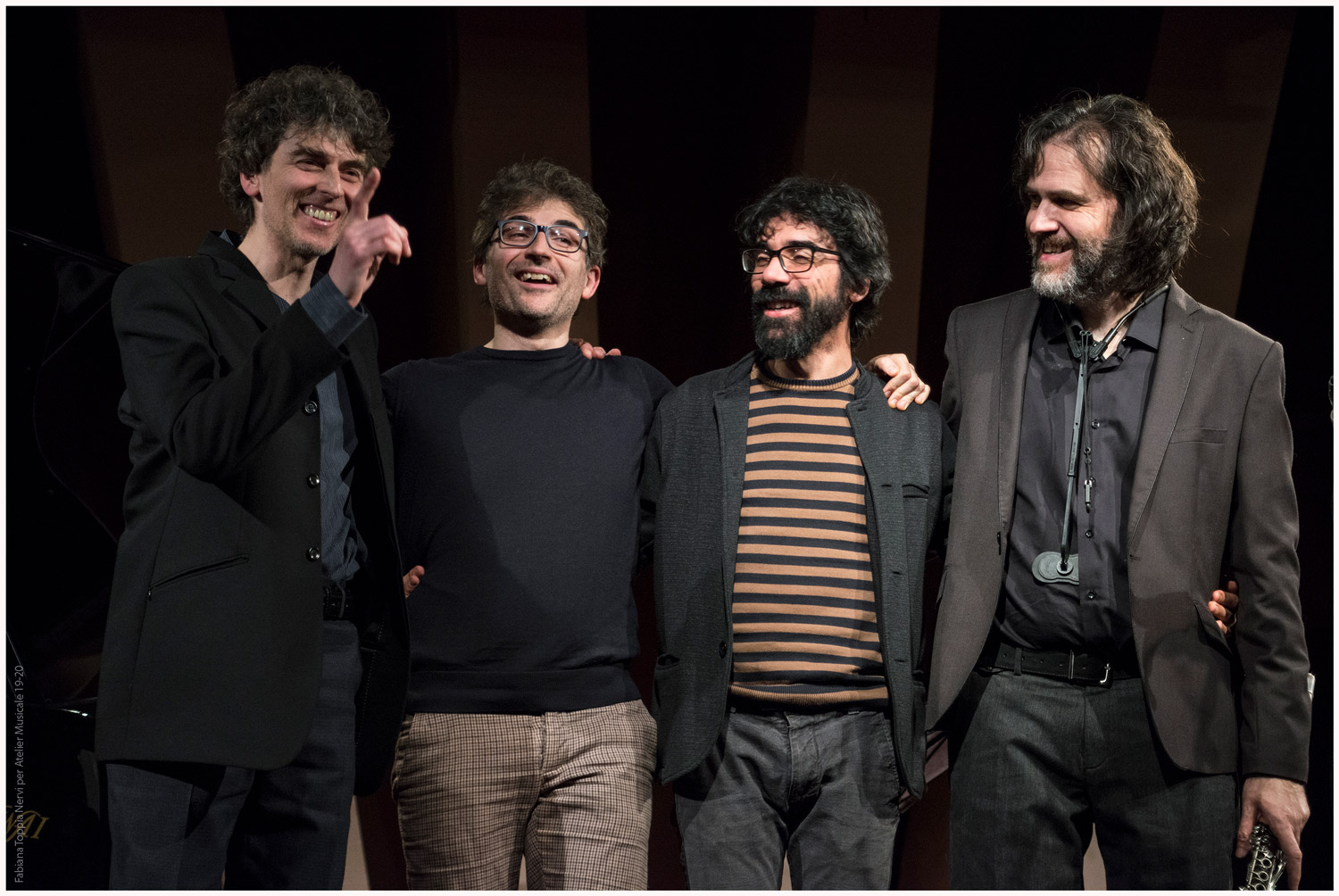
OSCAR DEL BARBA – Pianist, composer, and arranger from Brescia. A graduate in piano and jazz performance with top honors, winner of several international awards including the Gorni Kramer Prize, Valentino Bucchi Prize, and the “Scrivere in Jazz” Competition (Sassari). He has collaborated with Markus Stockhausen, Dave Liebman, Javier Girotto, and Francesco Guccini, performing throughout Europe and Latin America. The author of more than ten albums as a leader — including Two Suites for Jazz Orchestra (Dot Time Records), Giuseppe Verdi Entangled (Da Vinci Records), and In Fabula (nusica.org) — he teaches jazz piano at the “Giuseppe Verdi” Conservatory in Milan.
ACHILLE SUCCI – One of the most original voices in European jazz on bass clarinet and alto saxophone, Succi is among Italy’s leading improvisers of his generation. He has collaborated with Kenny Wheeler, Uri Caine, Ralph Alessi, Franco D’Andrea, and Furio Di Castri, performing at numerous international festivals. Known for his distinctive language blending jazz, avant-garde, and contemporary music, he has released several critically acclaimed albums and teaches jazz at Siena Jazz University and the Conservatory of Ferrara.
GIACOMO PAPETTI (Brescia, 1984) – Electric bassist, double bassist, and composer active in contemporary jazz, alternative pop-rock, and experimental music. He has appeared on over 35 albums, including several as leader or co-leader with groups such as The Loom (with F. Sigurtà, A. Succi, N. Bandello), Small Choices (with E. Maniscalco and G. Rubino), Mopoke (with Michele Bonifati and Filippo Sala), and Dimidiam (with Massimiliano Milesi). He has performed hundreds of concerts in theaters, clubs, and festivals across Italy and abroad. He currently teaches jazz double bass at the Milan Conservatory and electric bass at the “Luca Marenzio” Conservatory in Brescia.
ANDREA RUGGERI – Drummer and composer active between jazz, world music, and sound research. He has collaborated with Paolo Fresu, Ralph Alessi, Stefano Battaglia, Furio Di Castri, Rita Marcotulli, Gianluigi Trovesi, and Elena Ledda, appearing at numerous festivals across Europe and the Mediterranean. He has recorded over forty albums for labels including Dodicilune, Da Vinci Jazz, S’Ard Music, and Caligola Records. A member of award-winning projects such as the Targa Tenco and Premio Nazionale Città di Loano, he was listed among the top talents in Top Jazz 2023. Founder of the ARE – Andrea Ruggeri Ensemble, he is a permanent member of the Oscar Del Barba OX Quartet.
Somewhere Story
America
The piece stands out for its strong rhythmic drive, featuring a metric subdivision alternating between two groups of three eighth notes or three groups of two — a classic hemiola. To emphasize this structure, the drums create a two-bar polyrhythm, expanding the subdivision into four groups of three eighths or six groups of two. Harmonically, the interpretation is quite free with respect to the chord symbols indicated in the score, and the rest of the band adds “open” sections, interspersing the thematic parts. These thematic moments are marked by a rock-like feel, contributing to an energetic and dynamic atmosphere.
Cool
The arrangement opens with an introduction for piano/synth and alto saxophone. The first section consists of an improvisation over a sequence performed by an arpeggiator. The theme then appears in a completely reharmonized version, with a distinctly jazz character. The sequence alternates between thematic statements and variations, maintaining a consistent jazz mood all the way to the final coda. The structure allows for interpretative and improvisational freedom, typical of a jazz-oriented approach.
I Feel Pretty
This piece is also in triple meter and alternates between 3/4 and 6/8 time, evoking South American folk rhythms such as the valse and chacarera. The performance is characterized by great rhythmic and harmonic freedom compared to the written score. The execution follows the structure of a jazz standard: theme exposition, instrumental solo sections shared among the musicians, and a return to the theme leading to a closing coda.
Maria
The score serves as a foundation for highly open improvisations that draw on both electronic and acoustic timbres. The theme — a calm contrast to the chaotic introduction — is divided between piano and alto saxophone, then develops with the entrance of the rhythm section and contrapuntal lines, leading to the piece’s conclusion. The overall approach is one of great interpretative freedom, with special attention to contrasts on multiple levels.
One Hand, One Heart
This delicate, dreamlike theme is treated with wide interpretative freedom. Harmonically, contrast is achieved through the use of clusters. The solo section features piano, electric bass, and bass clarinet in alternation, creating an ethereal and spontaneous atmosphere that lasts until the end of the piece.
Somewhere
The arrangement evokes the jazz-rock sound of the 1980s and ’90s. Here too, the approach is very free — similar to that of a jazz standard — leaving room for rhythmic and harmonic spontaneity and improvisation, while keeping the thematic elements clearly recognizable, as in all the other pieces.
Tonight
The opening is built on a 3-against-4 polyrhythm, designed to create both harmonic and rhythmic contrast, generating a sense of rhythmic “floating.” When the theme enters, the pulse stabilizes. This is followed by a piano solo, a restatement of the theme, and finally a bass clarinet solo over a rock groove built on an ostinato vamp. The progression culminates in a crescendo of tension, ending in a kind of final “implosion” — an intense and increasingly dense surge of energy and atmosphere.
Sostieni nusica.org
nusica.org è un’associazione no profit che promuove la cultura musicale.
Partecipa al progetto con una donazione di 14 euro e riceverai il cd in regalo.